
Per Diem Nurse Staffing Houston For Facilities
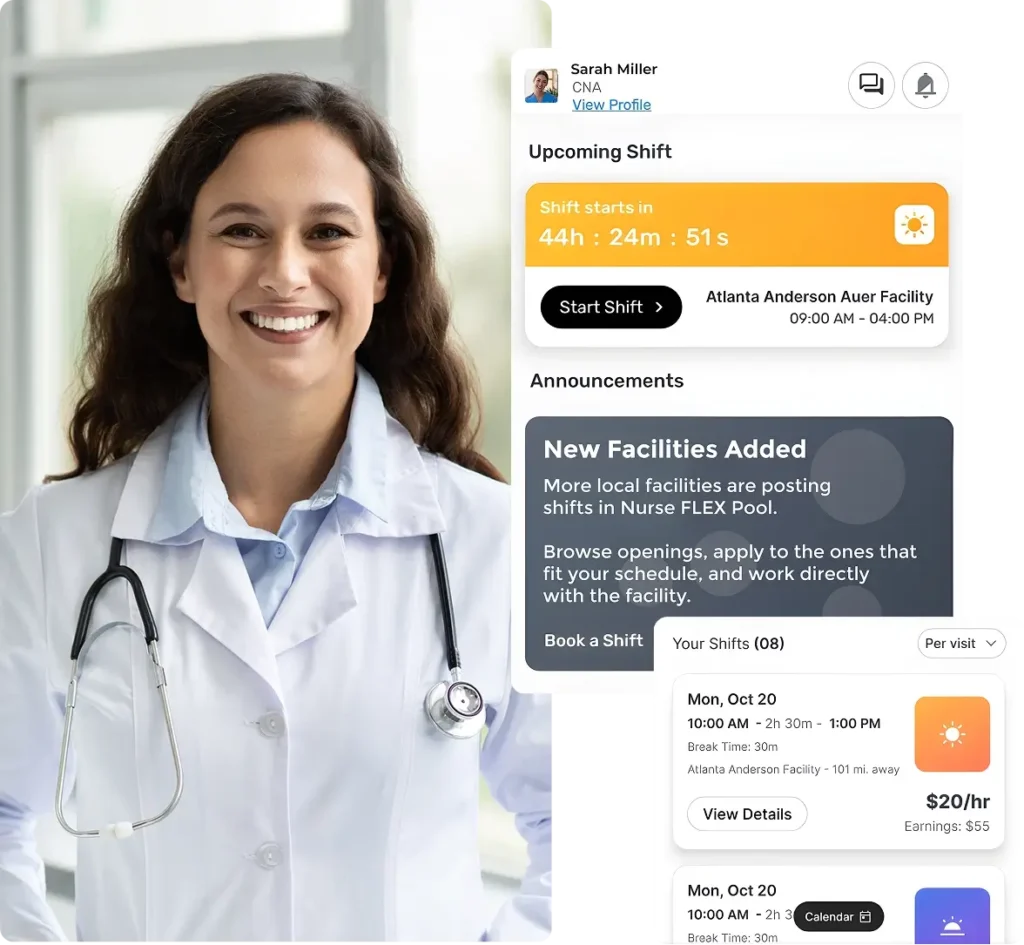
Nurse FLEX Pool is a subscription-based staffing access model from Nurses Lounge that helps Houston healthcare facilities post PRN and per diem shifts to a local Float Pool through an on-demand platform and mobile app, without hourly mark-up fees.
If your team is searching for per diem nurse staffing in Houston, the real question is not only how to fill the next open shift. It is how to manage recurring PRN and per diem demand in a market where large health systems are expanding, nurse competition remains high, and overtime or agency use can become the default. Nurse FLEX Pool gives Houston facilities a third option: direct access to local nurses through a flat monthly subscription fee and a more repeatable shift coverage workflow.
Why per diem nurse staffing is a bigger issue in Houston right now
Houston is one of the most complex healthcare labor markets in the country. The region includes the Texas Medical Center, major multi-hospital systems, suburban growth corridors, specialty care expansion, and a broad mix of acute, post-acute, outpatient, and community-based care settings. That scale creates opportunity, but it also creates constant staffing pressure at the facility level.
Recent Houston-area reporting shows hospital systems continuing to expand capacity. In Cy-Fair alone, Community Impact reported a $685 million hospital under construction plus two more hospitals expanding for a combined $377.5 million, with leaders citing extreme population growth and rising local demand for care. Houston Methodist Cypress Hospital is a 569,100-square-foot facility, Memorial Hermann Cypress announced a new six-story tower, and HCA Houston Healthcare North Cypress is expanding with a new three-story tower. More capacity means more demand for nurses, more shift coverage complexity, and more competition for the same local workforce.
That is why per diem nurse staffing in Houston is not just a scheduling issue. It is a workforce strategy issue tied to labor cost control, nurse fatigue, operational flexibility, and how often your team gets pushed back into premium-rate staffing decisions.
What Houston healthcare leaders are actually deciding when a shift opens
When a shift opens in Houston, the decision is rarely just about one vacancy. You are deciding whether to absorb the pressure internally, pay for it through agency markups, or build a more repeatable local coverage model for recurring demand.
That decision is harder in Houston because this is not a simple single-campus market. The labor pool is spread across the Medical Center, major suburban systems, community hospitals, specialty units, and facilities stretching across Harris County and surrounding counties. A nurse may be technically available in Greater Houston, but that does not mean the shift is practically fillable for your location, timing, specialty, or commute reality.
Competitor pages reflect that same pressure. Houston staffing agencies tend to lead with speed, urgent fill promises, and broad contingent coverage. For example, local competitor Hearthstone emphasizes 24 to 72 hour placement and per diem, contract, and temp-to-hire options, while Interim HealthCare positions around flexible contingent staffing, contract assignments, and outsourced recruiting support. That tells us how the market talks about the problem. But speed alone does not solve the recurring economics and workflow problem behind repeated PRN demand.
How Houston facilities usually handle PRN staffing
The right staffing path depends on what is creating the most pressure:
a same-day hole, a lack of internal float infrastructure, or recurring dependence on agencies and overtime.
Use agencies when urgency is the only priority
Agency staffing can still be the fastest outside option when a shift must be covered immediately and there is no established local workflow in place. In Houston, many agencies position around urgent fill speed, broad clinician access, and outsourced credentialing. The tradeoff is cost volatility, middleman-based staffing economics, and less direct control over how recurring coverage gets managed over time.
Use an internal Float Pool when the system already exists
An internal Float Pool can work well when your organization already has the recruiting pipeline, onboarding structure, scheduling discipline, and cross-facility operational support to sustain it. Houston Methodist’s own system float pool illustrates that model. Their careers page highlights flexible scheduling, geographic preferences, onboarding support, and per diem assignments across multiple entities and specialties including ER, ICU, IMU, Med/Surg, and Women’s Services.
Use Nurse FLEX Pool when the need keeps repeating
Nurse FLEX Pool is built for recurring PRN staffing in Houston. It gives facilities a more direct way to post per diem and PRN shifts to a local Float Pool through a subscription-based model, without defaulting to hourly agency markups every time demand returns.
The cost of open-shift coverage keeps compounding in Houston
The external problem is ongoing staffing pressure in a large and growing Houston healthcare market where service expansion and population growth continue to increase demand.
The internal problem is that your team still has to explain labor costs that remain hard to predict, even when the same shift patterns keep repeating. Nights, weekends, call-outs, census spikes, specialty coverage gaps, and seasonal fluctuations all create recurring PRN demand.
The broader problem is philosophical as well as financial. A Houston healthcare facility should not have to rely on a staffing middleman every time it needs access to nurses who already live and work in the region.
If that cycle continues, the cost of inaction is familiar: more overtime pressure, more agency dependence, less budget visibility, more management friction, and no durable improvement in how recurring per diem coverage gets handled.
This pressure is not hypothetical. The Texas Hospital Association reports that in 2023, more than 60% of hospitals were operating with fewer beds and reduced services because of staffing shortages. It also projects that by 2032, demand for full-time registered nurses in Texas will outpace supply by more than 57,000 positions, a 16% deficit.
A Houston staffing agency alternative built for recurring shift coverage
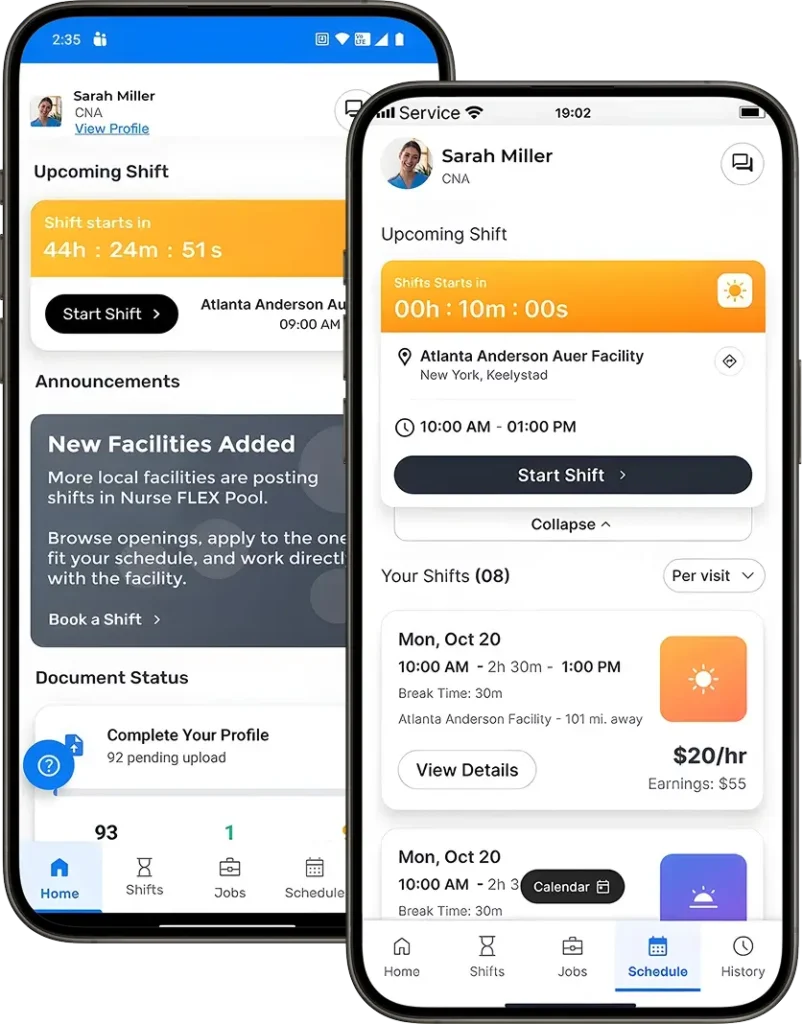
Nurse FLEX Pool gives your facility a flat monthly subscription fee and unlimited access to a local Float Pool through an on-demand staffing platform and mobile app. Instead of restarting the staffing process every time a PRN or per diem shift opens, your team can use one workflow to post shifts, review local nurses, and build a more repeatable coverage model over time.
This is what makes Nurse FLEX Pool a practical alternative to staffing agencies in Houston. It is not built around hourly markups. It is built around direct access, repeat use, and more predictable staffing economics for recurring demand.
Nurse FLEX Pool is not a staffing agency. Nurses Lounge does not charge healthcare facilities hourly mark-up fees for access to the platform.
Your facility still decides who to approve, how to manage shift coverage, and how this model fits into your broader workforce strategy.
- Your team posts PRN and per diem shifts through the platform.
- Local nurses can review and apply through the mobile app workflow.
- Your facility reviews credentials and resumes, then approves the nurses you want to work.
- Over time, your team builds a more usable local Float Pool for recurring Houston shift coverage.
Which option makes the most sense for Houston shift coverage?
The better staffing model depends on the type of pressure your facility is under. If the problem is a true emergency, one option may make more sense. If the problem is recurring PRN coverage, the economics and workflow often look very different.
| Decision factor | Agency staffing Best for immediate external fill | Internal Float Pool Best when internal infrastructure is already strong | Nurse FLEX Pool Best for recurring local PRN and per diem access |
|---|---|---|---|
| Best fit | Immediate urgent coverage | Organizations with mature internal staffing operations | Recurring PRN and per diem coverage |
| Cost structure | Hourly markups or bill rates | Internal labor and management overhead | Flat monthly subscription fee |
| Speed to start | Often fastest | Fast if already built | Requires setup and adoption |
| Fee predictability | Lower predictability | Moderate to high | Higher predictability |
| Facility control | Less direct control | Highest internal control | More direct facility control |
| Recruiting burden | Lower for facility | Higher for facility | Shared through platform workflow |
| Fit for recurring weekly shifts | Often becomes expensive | Can work with strong internal management | Built for repeat local access |
| Houston market practicality | Broad regional reach, variable local fit | Strong if internal system already spans local geographies | Built around practical local nurse access |
Why Houston shift coverage requires a local model
Houston is not one uniform staffing market. It is a broad regional healthcare environment made up of downtown medical campuses, suburban growth corridors, specialty hospitals, and community facilities competing for the same clinical labor pool.
That matters because practical fillability is local. In a market this large, distance, traffic, parking, toll routes, shift timing, specialty fit, and facility familiarity all affect whether a nurse can realistically pick up a shift. A regional list of clinicians is not the same thing as a workable local nurse pool.
Houston’s size also creates more fragmentation between theoretical supply and actual availability. A nurse who is willing to work in the Texas Medical Center may not be willing to drive to Cypress, Katy, The Woodlands, or another facility across the metro for a last-minute shift. That gap is where many staffing models become less efficient.
This is why Houston healthcare facilities often need more than general nurse staffing. They need Houston shift coverage solutions built around practical local access and repeatable use.
What a local nurse pool means in Houston
A local nurse pool for Houston shift coverage means more than having names in a system. It means having a more direct way to reach nurses who are realistically available to work near the facility that needs help.
That matters even more in Houston because geographic preference is part of how nurses choose work. Houston Methodist’s float pool explicitly highlights location preference and requires nurses to select the locations they support. That is a useful signal for how the market actually works: nurse availability is tied to geography, not just licensure.
Nurse FLEX Pool is built around that local access logic. Facilities post shifts, review nurses, and build a more repeatable workflow around the local Float Pool rather than starting from zero every time staffing gets tight.

Why Houston facilities still need better PRN staffing workflows
Houston is investing in long-term workforce development, but those gains take time. Local hospitals and colleges are actively trying to grow the nursing pipeline. Community Impact reported that local hospital leaders see earlier investment in the healthcare career path as crucial, while Lone Star College-CyFair said its healthcare programs are operating near full capacity.
At the state level, the pipeline is still constrained. The Texas Hospital Association reports that Texas nursing schools turned away 13,705 qualified applications in 2023 because of faculty and clinical space limitations. The same source notes the RN vacancy rate rose from 6% in 2019 to 17.6% in 2022.
Even with policy support, the gap is not gone. Texas lawmakers increased funding for nursing shortage reduction and faculty loan repayment, but hospitals still need practical staffing workflows for recurring demand now, not only larger workforce reforms later.
That is the operating reality for Houston facilities. Long-term pipeline work matters, but when your team has recurring PRN staffing needs this month, the immediate question is still how to access local nurses more directly and manage shift coverage more predictably today.
Built on a broader nursing marketplace
Nurses Lounge is a career marketplace for nurses. The platform connects nurses, students, schools, associations, healthcare facilities, and industry stakeholders on one professional network. That broader ecosystem matters because direct sourcing works better when facilities are not operating in isolation from the nursing profession.
For Houston healthcare facilities, that means Nurse FLEX Pool sits inside a larger nurse-first marketplace designed to improve visibility, access, and connection with nurses across the communities you serve.
Common questions about per diem nurse staffing in Houston
What is per diem nurse staffing in Houston?
Per diem nurse staffing in Houston refers to filling shifts on an as-needed basis instead of relying on full-time staffing alone. Facilities typically use per diem or PRN coverage for call-outs, census changes, nights, weekends, holidays, and recurring contingent staffing needs. The model can be handled through staffing agencies, an internal Float Pool, or a direct-access platform such as Nurse FLEX Pool.
Why is per diem nurse staffing especially challenging in Houston?
Per diem nurse staffing in Houston is challenging because the market is large, competitive, and geographically spread out. Hospitals and health systems across the region are expanding, and facilities are competing for the same nursing workforce. Practical shift coverage depends on specialty, commute, timing, and whether a nurse is realistically willing to work near your facility, not just whether someone is licensed in the metro.
How do Houston healthcare facilities cover PRN shifts without relying only on staffing agencies?
Houston healthcare facilities can cover PRN shifts through an internal Float Pool, a direct-access staffing platform, or a blended staffing model instead of relying only on staffing agencies. The best option depends on whether your main issue is urgent fill speed, recurring shift volume, internal management capacity, or fee predictability. Nurse FLEX Pool is built for facilities that want a more repeatable local coverage workflow for recurring PRN and per diem demand.
What is the best alternative to staffing agencies in Houston for recurring per diem coverage?
The best alternative to staffing agencies in Houston for recurring per diem coverage is usually a model that improves local nurse access and reduces repeated hourly markup costs. For some organizations, that may be an internal Float Pool. For others, a subscription-based staffing access model such as Nurse FLEX Pool makes more sense because it gives the facility a more direct workflow for posting shifts, reviewing nurses, and managing repeat coverage through a local Float Pool.
How can Houston hospitals reduce overtime and agency dependence?
Houston hospitals can reduce overtime and agency dependence by creating a more repeatable process for recurring PRN and per diem coverage instead of treating every open shift as a separate emergency. That may include strengthening internal Float Pool operations, expanding local nurse access, and using a subscription-based model that avoids hourly mark-up fees. The exact impact depends on shift volume, staffing mix, and current agency reliance.
Why does local nurse access matter for Houston shift coverage solutions?
Local nurse access matters because Houston is a large metro with real commute friction between medical districts, suburban campuses, and community facilities. A nurse may be open to shifts near one part of the city but not another. For recurring PRN and per diem staffing, practical local access is often what determines whether coverage becomes repeatable.
Is Nurse FLEX Pool a staffing agency?
No. Nurse FLEX Pool is not a staffing agency. It is a subscription-based staffing access model that helps healthcare facilities post PRN and per diem shifts to a local Float Pool through an on-demand platform and mobile app. Nurses Lounge does not charge healthcare facilities hourly mark-up fees for access to the platform.
When does Nurse FLEX Pool make the most sense for a Houston facility?
Nurse FLEX Pool makes the most sense when a Houston facility is dealing with recurring PRN and per diem coverage needs rather than occasional one-time emergencies. It is especially relevant when leadership wants a more predictable fee structure, more direct facility control, and a better alternative to repeated overtime and agency use.
Is Nurse FLEX Pool right for every Houston healthcare facility?
No. Nurse FLEX Pool is not necessarily the right fit for every facility. If an organization already has a highly effective internal process for recurring PRN and per diem coverage, it may need less outside support. Nurse FLEX Pool is best suited for facilities that want a more direct and repeatable staffing model than relying only on overtime or staffing agencies.
See if Nurse FLEX Pool fits your Houston staffing model
If you are looking for per diem nurse staffing in Houston that gives you more control than agency staffing and more predictability than repeated overtime, request a demo to see how Nurse FLEX Pool fits your facility.
We can walk through how the model works, where it fits in your staffing plan, and whether a subscription-based approach makes sense for your recurring PRN and per diem demand.