
What Is the Alternative to Nurse Staffing Agencies?
The best alternative to nurse staffing agencies depends on what problem you are actually trying to solve. If you need a one-time urgent fill, an agency may still be the fastest outside option. But if your facility is dealing with recurring PRN and per diem shifts, repeated agency use often turns a staffing problem into a cost-control problem.
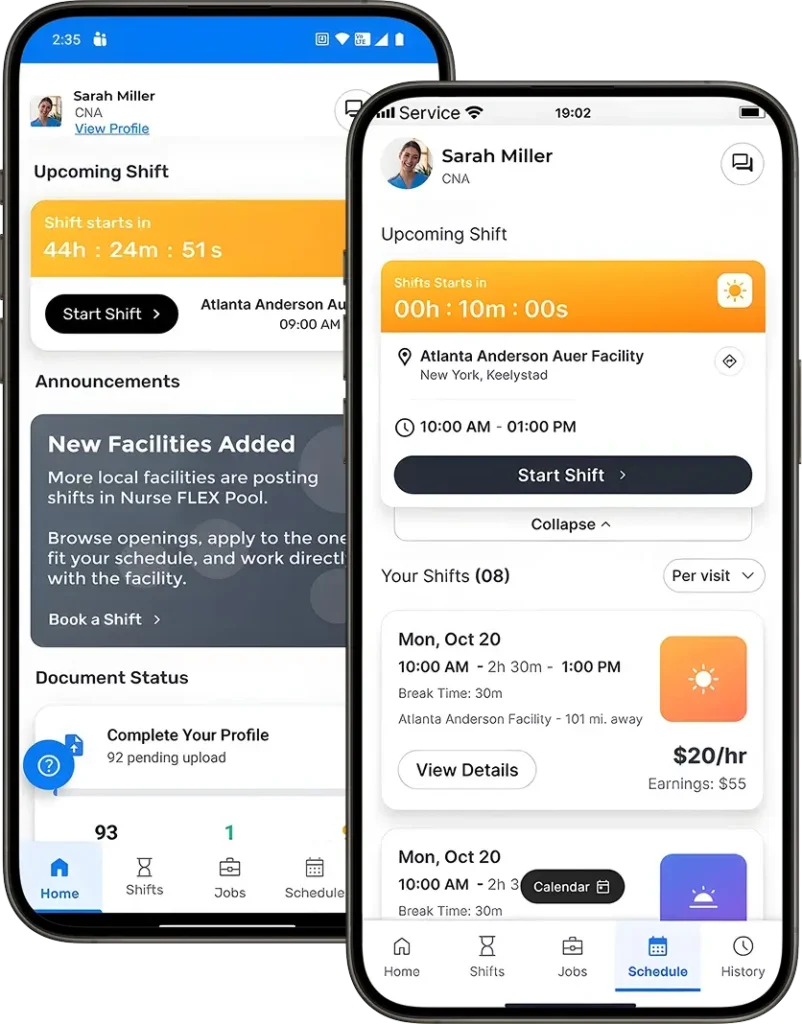
Nurse FLEX Pool is a subscription-based staffing access model from Nurses Lounge that gives healthcare facilities a third option between overtime and agency staffing. Your team can post PRN and per diem shifts to a local Float Pool through an on-demand platform and mobile app, with a flat monthly subscription fee, unlimited access, and no hourly mark-up fees.
If you are asking what the alternative to nurse staffing agencies is, the practical answer is this: a more direct sourcing model that helps you reach local nurses, reduce repeated middleman costs, and build a more repeatable shift coverage workflow over time.
Why this question matters more right now
Healthcare facilities are asking about alternatives to nurse staffing agencies because staffing pressure is no longer just a temporary disruption. It is a recurring operating issue. Texas hospitals are growing, patient demand is rising, and workforce shortages are still constraining how quickly facilities can safely staff beds and units.
Fort Worth gives a clear example of the pressure. In 2026, local leaders highlighted major expansion activity across JPS Health Network, Baylor Scott & White, Cook Children’s, and Texas Health Harris Methodist Fort Worth, while also acknowledging that expansion is only useful if those facilities can actually staff the added capacity. In the words of one Baylor Scott & White leader, beds without staff are just empty space.
That is why the real buyer question is not only, “How do we fill the next shift?” It is, “How do we reduce agency dependence without pushing more cost and burnout back onto the internal team?”
What healthcare leaders are actually deciding when a shift opens
When a shift opens, you are not just making a coverage decision. You are choosing which staffing economics and workflow your facility will keep reinforcing.
Most facilities end up cycling through the same three paths: absorb the gap through overtime, send the shift to an agency, or build a more direct model for recurring shift coverage.
Overtime may solve the immediate schedule hole, but it raises premium labor costs and adds burnout pressure. Agency staffing may solve the urgency problem, but it often introduces hourly markups, less continuity, and lower budget predictability. A direct sourcing model is different because it is designed to make repeat access to local nurses more practical over time.
That distinction matters because recurring PRN and per diem demand is not the same as a one-off emergency. If the same staffing patterns keep returning on nights, weekends, call-outs, and census swings, the problem is no longer just fill speed. It is the lack of a sustainable staffing model.
How facilities usually handle staffing when agency use becomes expensive
The best staffing agency alternative depends on what is driving pressure inside your facility: a same-day emergency, limited internal staffing infrastructure, or repeated dependence on agency coverage for PRN and per diem shifts.
Use overtime when the gap is isolated and internal capacity can absorb it
Overtime can work when the opening is occasional and your team has the margin to absorb it. But if overtime becomes the default answer, your labor costs rise and burnout becomes part of the staffing plan.
Use agencies when urgency is the only priority
Agency staffing can still be the practical choice when a shift must be filled immediately and there is no existing workflow or nurse pool in place. The tradeoff is that you are still operating inside a middleman model with variable costs and less continuity.
Use an internal Float Pool when your organization already has the infrastructure
An internal Float Pool can be effective when your system already has strong recruiting, scheduling, credentialing, and day-to-day operational management. For organizations that have already built that infrastructure, it may be the right long-term fit.
Use Nurse FLEX Pool when the need keeps repeating
Nurse FLEX Pool is built for recurring PRN and per diem staffing needs. It gives your facility a more direct way to post shifts, review nurses, and build a local Float Pool through a subscription-based model, instead of paying hourly markups each time demand returns.
Why many healthcare facilities are looking for a better alternative to agency staffing
The external problem is clear. Texas continues to add population and healthcare jobs, but workforce growth is not keeping pace with demand. The Texas Hospital Association notes that the state has added nearly 30,000 people per month over the past decade and may need roughly 2,100 to 2,700 additional healthcare workers every month just to maintain current staffing levels.
The internal problem is what that looks like inside your building. You are still accountable for labor cost trajectory, coverage reliability, and safe staffing levels, even when the same shift patterns keep repeating. If recurring gaps keep sending your team back to agency staffing, the cost problem compounds year over year.
The philosophical problem is just as important. A healthcare facility should not have to rely on a staffing middleman every time it needs access to nurses who already live and work in the community.
If nothing changes, the cost of inaction is familiar: more overtime pressure, more agency dependence, less budget predictability, more management friction, and no durable improvement in how recurring PRN and per diem coverage gets handled.
A subscription-based alternative to staffing agencies for recurring shift coverage
Nurse FLEX Pool gives your facility a flat monthly subscription fee and unlimited access to a local Float Pool through an on-demand staffing platform and mobile app. Instead of restarting the staffing process every time a PRN or per diem shift opens, your team can use one workflow to post shifts, review local nurses, and build a more repeatable coverage model.
This is what makes Nurse FLEX Pool a practical alternative to nurse staffing agencies. It is not built around hourly markups. It is built around direct access, repeat use, and more predictable staffing economics for recurring demand.
Nurse FLEX Pool is not a staffing agency. Nurses Lounge does not charge healthcare facilities hourly mark-up fees for access to the platform.
Your facility still decides who to approve, how to manage shift coverage, and how this model fits into your broader workforce strategy.
- Your team posts PRN and per diem shifts through the platform.
- Local nurses can review and apply through the mobile app workflow.
- Your facility reviews credentials and resumes, then approves the nurses you want to work.
- Over time, your team builds a more usable local Float Pool for recurring shift coverage.
Overtime vs agency staffing vs subscription-based staffing access
If you are evaluating alternatives to nurse staffing agencies for hospitals or healthcare facilities, the right answer depends on whether your problem is emergency fill speed or recurring shift coverage. Those are not the same decision.
| Decision factor | Overtime Best for isolated, absorbable gaps | Agency staffing Best for immediate external fill | Nurse FLEX Pool Best for recurring local PRN and per diem access |
|---|---|---|---|
| Best fit | Occasional internal gap coverage | Immediate urgent external fill | Recurring PRN and per diem coverage |
| Cost structure | Premium internal labor cost | Hourly markups and variable per-shift costs | Flat monthly subscription fee |
| Budget predictability | Low to moderate | Lower predictability | Higher predictability |
| Staffing control | High internal control | Less direct control | More direct facility control |
| Continuity potential | Higher when staff can absorb it | Mixed | Built for repeat access to a local Float Pool |
| Long-term sustainability | Often limited by burnout | Often limited by markup economics | Built for repeat use and staffing cost control |
| Best use case | Isolated openings | Crisis response | Ongoing shift coverage strategy |
Direct sourcing vs the middleman
What direct sourcing means in nurse staffing
Direct sourcing is a workforce model that helps an organization source and engage its own talent pools for temporary or contingent positions through a technology-enabled workflow. In plain terms, it means the facility has a more direct path to nurses instead of relying entirely on an outside staffing middleman.
In healthcare, that matters because shift coverage often depends on speed, local availability, and repeatability. A broad staffing list is not the same as having a practical local pool of nurses your facility can reach, review, and approve through one operating workflow.
Nurse FLEX Pool applies this direct sourcing logic to PRN and per diem staffing. The goal is not to make emergency staffing disappear. The goal is to give facilities a better model for recurring demand so agency use becomes less automatic.
Why local nurse access matters in practice
Many agency alternatives sound efficient in theory because they promise access to a large supply of clinicians. But practical shift coverage still depends on whether local nurses can realistically work the facility, unit, and schedule that needs help.
Commute friction, shift timing, facility preference, unit familiarity, and same-day availability all shape whether a local opening is truly fillable. That is why a local nurse pool matters more than general visibility alone.
Competitor pages across the market make this point in different ways. Some position their value around control over clinician approval, some emphasize no long-term contracts, and some focus on direct access to local nurse contacts. The common thread is that facilities want a more direct path to nurses and more control over recurring shift coverage.
Nurse FLEX Pool fits that market shift by giving facilities subscription-based access to a local Float Pool and a repeatable workflow, rather than another round of hourly markups.
Why workforce pipeline growth does not solve today’s open shifts
Long-term nursing pipeline work matters, and Texas is actively investing in it. The Texas Hospital Association cites a projected shortage of 56,371 RNs by 2036 and notes that the state added 23 new nursing education programs between 2020 and 2024.
Local Fort Worth and Tarrant County efforts are moving in the same direction. Recent reporting has highlighted Tarrant County College partnerships with regional health systems, Texas Health tuition support, Baylor Scott & White tuition reimbursement, and the launch of new nursing education capacity at the University of North Texas Health Science Center at Fort Worth.
But those are medium-term solutions. If your team needs better per diem staffing coverage now, the immediate question is still how to access local nurses more directly and manage recurring demand more predictably today.
Why Nurse FLEX Pool fits the buyer question better than a generic staffing marketplace
Many healthcare staffing platforms lead with speed, size of marketplace, or broad clinician access. That can be useful, especially for urgent fill situations. But the buyer asking, “What is the alternative to nurse staffing agencies?” is usually asking a deeper question about economics, control, and repeatability.
That is where Nurse FLEX Pool is positioned differently. It is designed to help facilities reduce reliance on temp staffing firms and repeated overtime by using a flat monthly subscription fee and unlimited access to a local Float Pool. The model is meant for recurring use, not just one-off transactions.
If your internal problem is that agency spend keeps compounding and you still need a board-ready answer to staffing cost control, a subscription-based staffing access model is often a more relevant answer than another pay-per-shift marketplace.
Which model fits recurring demand?
Built on a broader nursing marketplace
Nurses Lounge is a career marketplace for nurses. The platform connects nurses, students, schools, associations, healthcare facilities, and industry stakeholders on one professional network. That broader ecosystem matters because direct sourcing works better when facilities are not operating in isolation from the nursing profession.
For healthcare facilities, that means Nurse FLEX Pool sits inside a larger nurse-first marketplace designed to improve visibility, access, and connection with nurses across the communities you serve.
Common questions about alternatives to nurse staffing agencies
What is the alternative to nurse staffing agencies?
The main alternatives to nurse staffing agencies are overtime, internal Float Pools, direct sourcing models, and subscription-based staffing access platforms. The best option depends on whether your facility is solving for a one-time emergency or recurring PRN and per diem demand. Nurse FLEX Pool is built for recurring shift coverage that needs more predictability than agency staffing and more sustainability than repeated overtime.
What is the best alternative to nurse staffing agencies for per diem shifts?
For recurring per diem shifts, the best alternative is usually a model that improves direct access to local nurses and reduces repeated hourly markup costs. For some organizations, that may be an internal Float Pool. For others, a subscription-based model such as Nurse FLEX Pool makes more sense because it supports repeat access through one workflow.
How can hospitals reduce agency dependence?
Hospitals can reduce agency dependence by building a more repeatable process for recurring PRN and per diem coverage. That may include strengthening an internal Float Pool, using direct sourcing technology, increasing local nurse access, and adopting a subscription-based staffing model that avoids hourly mark-up fees.
Is overtime a better alternative to agency staffing?
Overtime can be the better option for isolated staffing gaps when internal teams can absorb the shift. It becomes less effective when it turns into a pattern, because premium labor costs and burnout pressure start compounding. For recurring gaps, facilities often need a third option beyond overtime and agency use.
What is direct sourcing in healthcare staffing?
Direct sourcing is a technology-enabled workforce model that helps organizations source temporary or contingent workers more directly through their own talent pools or targeted external pools. In healthcare, that means giving facilities a more direct path to local nurses instead of relying only on staffing middlemen.
Is Nurse FLEX Pool a staffing agency?
No. Nurse FLEX Pool is not a staffing agency. It is a subscription-based staffing access model that helps healthcare facilities post PRN and per diem shifts to a local Float Pool through an on-demand platform and mobile app. Nurses Lounge does not charge healthcare facilities hourly mark-up fees for access to the platform.
When does Nurse FLEX Pool make the most sense?
Nurse FLEX Pool makes the most sense when your facility is dealing with recurring PRN and per diem coverage needs rather than occasional one-time emergencies. It is especially relevant when leadership wants more predictable fees, more direct facility control, and a better alternative to repeated overtime and agency use.
Is Nurse FLEX Pool right for every facility?
No. If your organization already has a highly effective internal process for recurring PRN and per diem coverage, it may need less outside support. Nurse FLEX Pool is best suited for facilities that want a more direct and repeatable staffing model than relying only on overtime or nurse staffing agencies.
See whether Nurse FLEX Pool fits your staffing model
If you are looking for a better alternative to nurse staffing agencies, request a demo to see how Nurse FLEX Pool fits your facility. We can walk through how the model works, where it fits in your staffing plan, and whether a local Float Pool approach makes sense for your recurring PRN and per diem coverage.